A war memorial on a volcano's rim
Auckland Museum and the Domain
The history of Auckland War Memorial Museum and the Auckland Domain beneath it: the 1929 building, the later atrium, and the volcano under the lawn.
Reserve your place at the performance ↗Quick answer
Auckland Museum's collections and exhibits began in 1852, and its present neoclassical building opened in 1929 on the crater rim of the Pukekawa volcano in the Auckland Domain. The Domain is the oldest park in the city. The museum has also served as a place of remembrance since 1929.
From a small museum to a hill
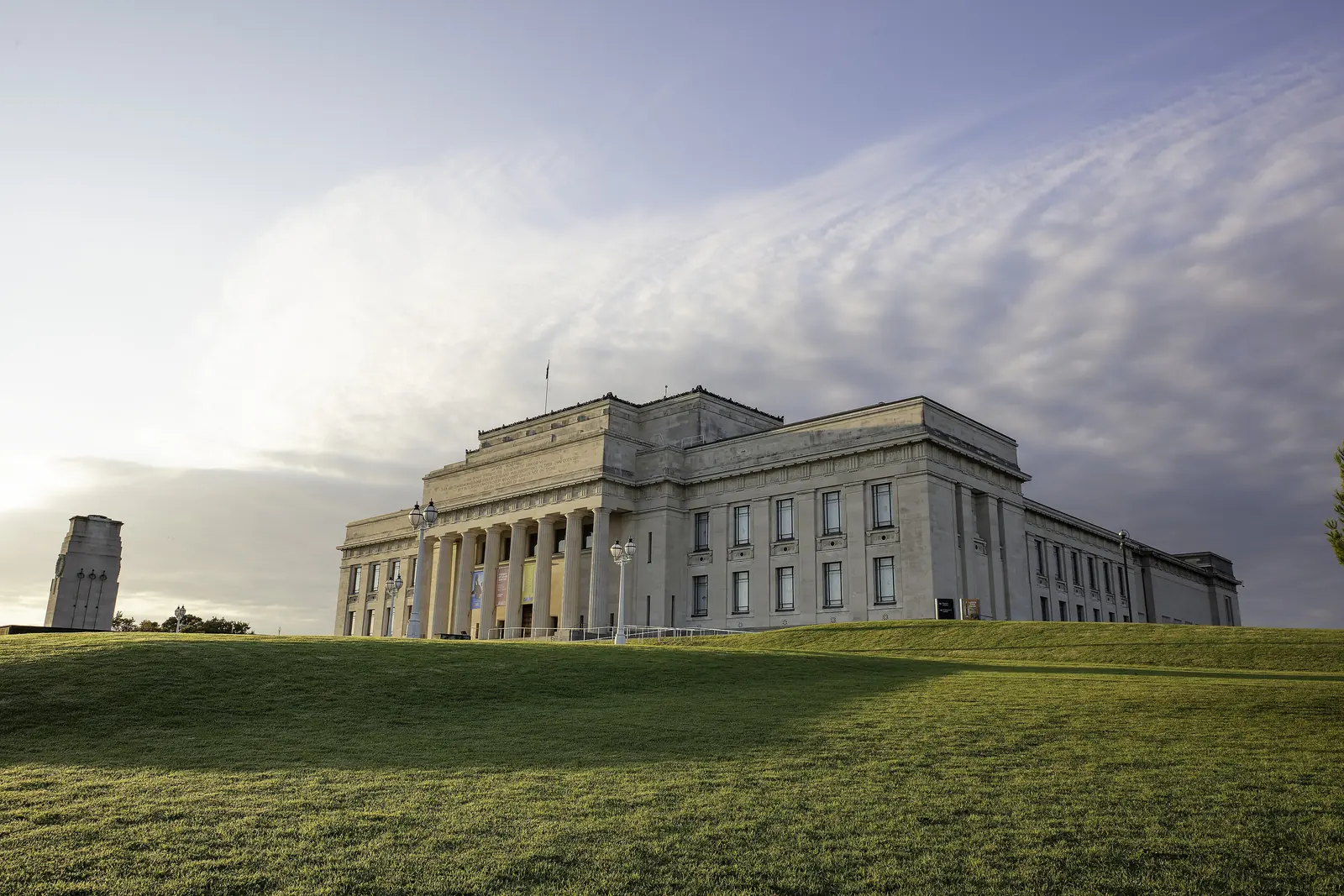
Auckland Museum's collections and exhibits began in 1852. The museum was first housed in a small cottage, and over the following decades it moved and grew. The need for better display conditions and extra space led to the idea of a purpose-built museum on a hill in the Domain. The institution has been called Auckland Museum, and since the new building opened it has more commonly been called Auckland War Memorial Museum. Its Māori name is Tāmaki Paenga Hira, and the museum uses both names in its own pages.
The war memorial building
The project for a purpose-built museum was merged with the idea of creating a memorial to the soldiers lost in the First World War. A worldwide architectural competition was held, and the winning design was neoclassical, reminiscent of Greco-Roman temples. Construction was completed in 1929, and the new building was opened by the Governor-General. The building was designed with a view to future extension, and it has since been extended twice. Standing in front of it, you see a temple-like portico of columns, which is a deliberate reference to the classical world.
A place of remembrance
Since 1929, the museum has also served as a place of remembrance for the many Aucklanders who sacrificed their lives in war. The museum's conditions of entry ask visitors to respect the tranquillity of the War Memorial sanctuaries and to behave in an appropriate manner there. That is worth remembering on the day of the Māori performance: the building is a museum, a memorial and a place where the performance is treated as tapu, and each asks for quiet and attention in its own way.
The dome, the atrium and Te Ao Mārama
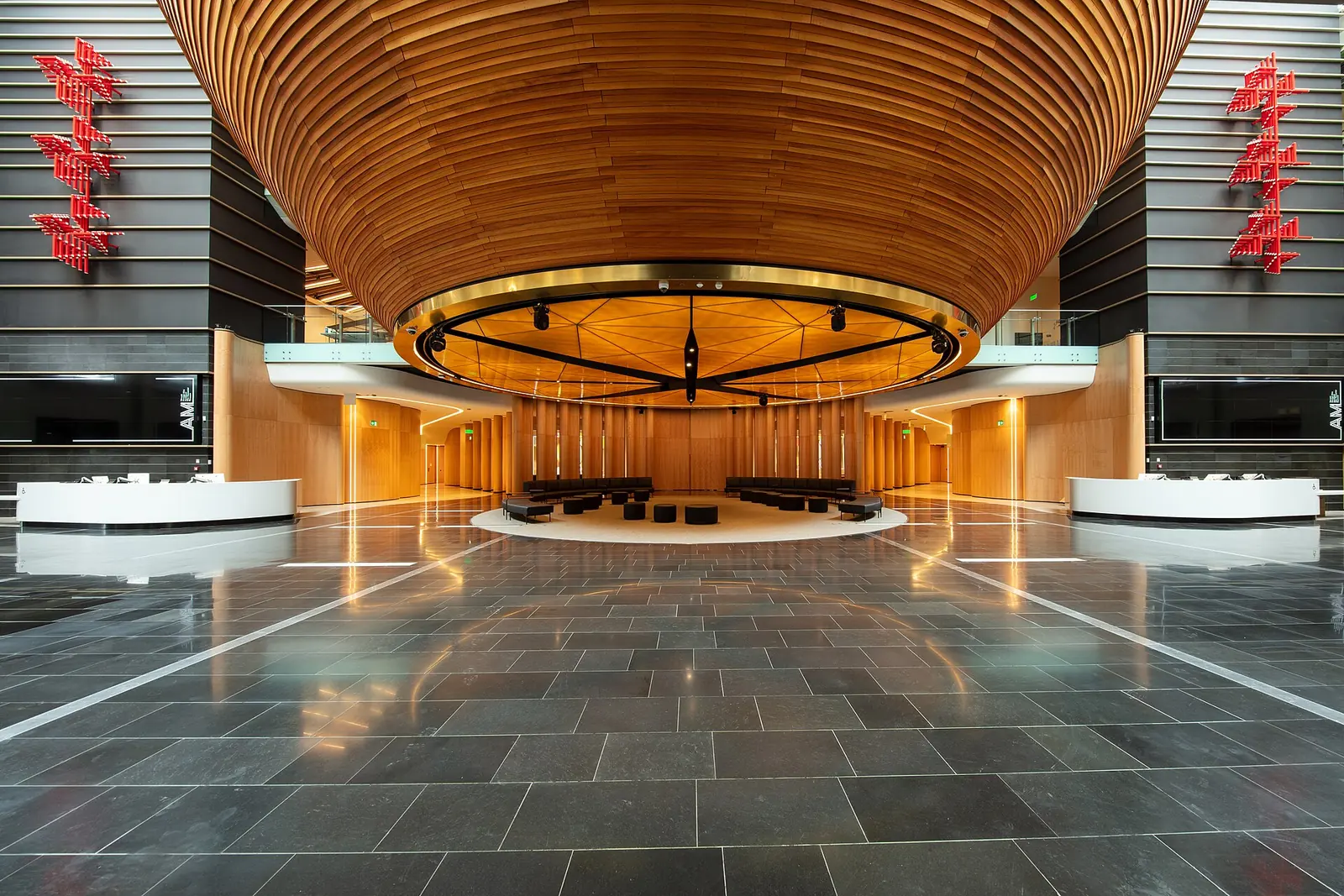
The museum was renovated and extended in two stages. The second stage, finished in 2007, built a great dome and atrium within the central courtyard, which increased the floor area. In 2020 the museum opened a redesigned South Atrium entrance, Te Ao Mārama, designed in collaboration with iwi and Pasifika communities in Auckland. Under its Tanoa bowl is an installation containing stories from Ngāti Whātua Orākei, Ngāti Paoa and Waikato Tainui.
The volcano under the lawn
The Auckland Domain is the oldest park in the city. It is the remains of the explosion crater and most of the surrounding tuff ring of the Pukekawa volcano, one of the oldest volcanoes in the Auckland volcanic field. The museum sits prominently on the crater rim. The site was originally named Pukekawa by Māori, and the park is now called Pukekawa / Auckland Domain by Auckland Council and others. The name is a reminder that the hill had a Māori history long before the museum was built.
Where Pukekaroa fits
A small scoria cone named Pukekaroa Hill stands in the centre of the crater. A sacred tōtara tree grows on top of it, and the Domain Wintergardens, with two large glass houses, lie on its north side. Pukekawa was identified early by Tāmaki Māori as one of the best sites in the isthmus area, with the north-facing side of the cones suited to growing kumara, while Pukekaroa itself was used for storage and as a pā site. Seeing the museum as a building on this ground explains why the Domain has two names.
Frequently asked questions
When did the museum building open?
Construction was completed in 1929, and the new building was opened by the Governor-General.
What style is the building?
Neoclassical, with a design reminiscent of Greco-Roman temples.
Is the Domain really a volcano?
Yes. The Domain is the remains of the explosion crater and tuff ring of the Pukekawa volcano, and the museum sits on the crater rim.
Sources